Product & UX Designer — Enterprise UX · Research · Design systems

Making complex technology usable.

I’m Jakob. From scientific computing at CERN and enterprise AI at PwC to a product of my own, I study how people work with sophisticated technology — and turn what I learn into software they can understand and act on.

Selected experience

CERNPwCMercedes-Benz

01 / Selected work

Different industries. The same fundamental challenge.

Whether designing enterprise infrastructure, AI-powered workflows or connected product experiences, my work starts with understanding complexity — and finding the simplest way for people to navigate it.

Client product images are rendered reconstructions — client interfaces and documents stay confidential. TraceFox, my own product, is shown as it ships.

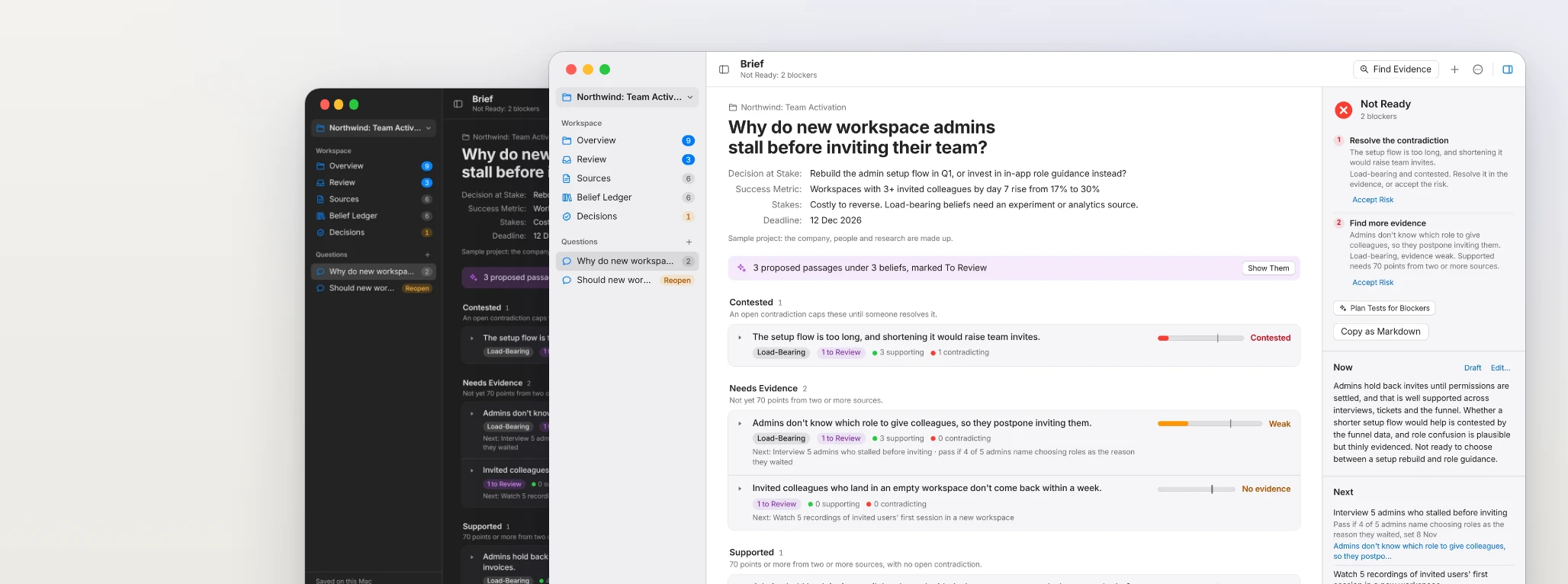
TraceFox for Mac in two windows, dark and light: a decision brief asking why new workspace admins stall before inviting their team, its beliefs grouped as Contested, Needs Evidence and Supported.

01TraceFox

Every product decision can show its evidence.

Product teams lose the reasons behind their decisions, and AI summaries of research are hard to check. I founded, designed and built TraceFox — a Mac app where agents find word-for-word evidence, people decide what counts, and a decision reopens when its evidence moves.

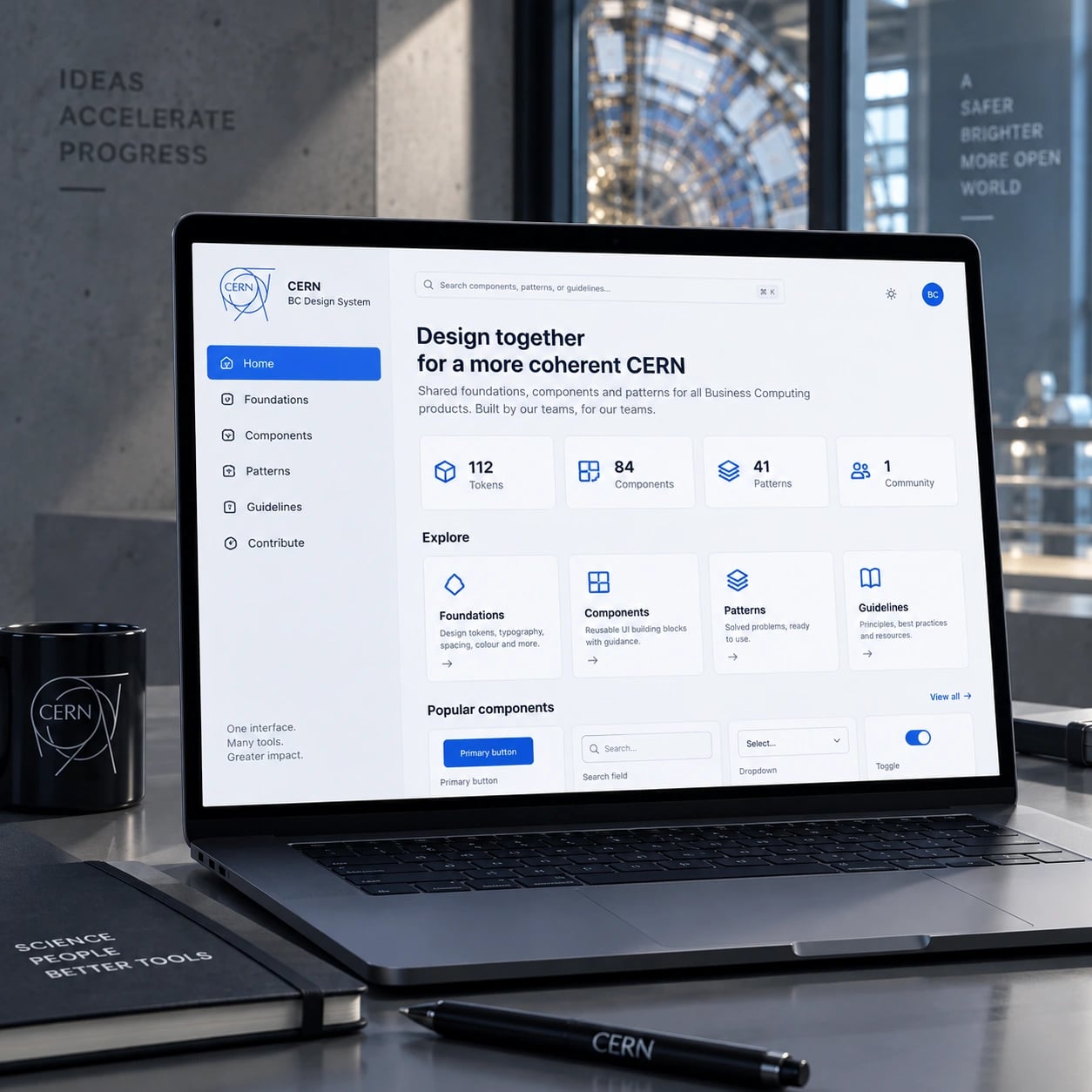
The CERN Business Computing design system open on a laptop, a particle detector in the hall behind it.

02CERN

200+ applications. One shared design language.

Across the 200+ internal applications of CERN’s Business Computing group, teams kept solving the same interface problems on their own. As the group’s dedicated UX designer, I led its first shared design system, built from a pilot on EDH — and the community of practice that keeps it evolving without me.

The document review open on a laptop: an invoice beside the values extracted from it.

03PwC

AI can extract information. But can people trust it?

Reviewers re-checked even high-confidence AI predictions by hand. I designed the review workflow that links every extracted value to its evidence, turns uncertainty into priorities and makes correction part of the work.

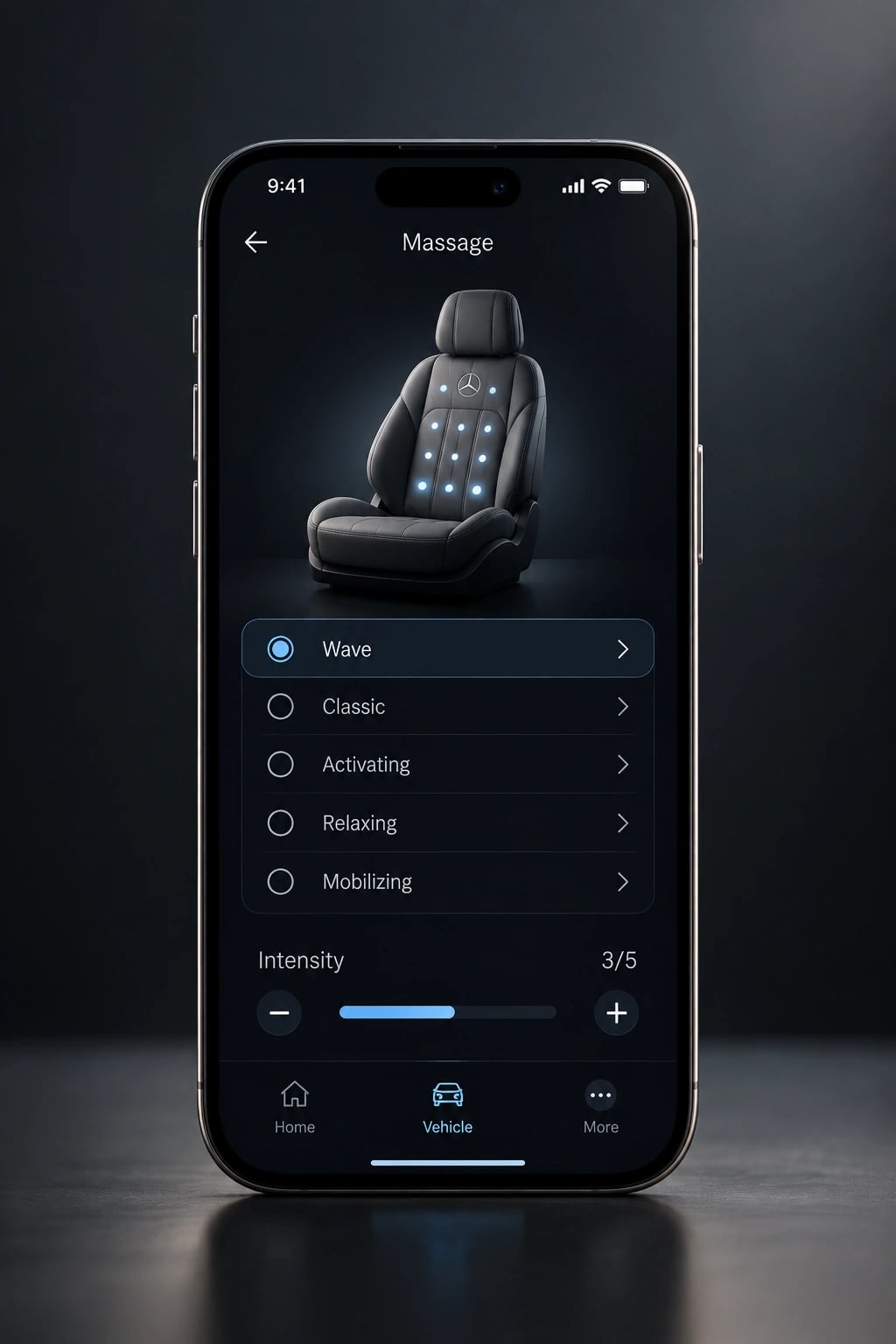
The MBUX companion app’s massage screen on a phone, beside the Mercedes-Benz star.

04Mercedes-Benz

When the device changes, what should stay familiar?

Should the MBUX companion app follow smartphone conventions, or carry the vehicle’s own interaction logic? Instead of settling it by preference, I built both as interactive concepts and tested them with 32 participants.

02 / Approach

From understanding the problem to shaping the system.

How I work, in four steps — each with the case study where you can see it.

  1. Understand the problem

    Research how people work, what they need to decide, and what the technology can really do.

  2. Structure the complexity

    Turn scattered decisions into coherent systems, information architectures and interaction models.

  3. Design and validate

    Explore alternatives, test the assumptions behind them, and build with engineering against the real constraints.

  4. Enable teams

    Build shared standards and ways of working that help others make good decisions without me in the room.

Jakob Ehe, portrait
Based in
Munich, Germany
Languages
German · English

03 / About

A designer comfortable with complexity.

I’m Jakob, a product and UX designer based in Munich. My work has taken me across scientific computing, enterprise software, artificial intelligence and automotive technology.

These environments have something in common: the technology is sophisticated, the constraints are real, and good design requires understanding much more than the interface.

At CERN, I led the first shared design system for a large enterprise application ecosystem. At PwC, I designed interactions that help people understand and verify AI-generated information. At Mercedes-Benz, I investigated how interaction principles can stay coherent across connected devices. With TraceFox, I founded, designed and built a product of my own: a Mac app for evidence-based product decisions.

I believe good design starts before the interface: with how people actually work, the decisions a system has to support, and what the technology underneath can really do. Since July 2026 I’ve worked independently.


04 / Contact

Complex problems deserve thoughtful design.

I’m interested in working with teams building ambitious technology — especially where research, systems thinking and interaction design can make a meaningful difference.

mail@jakobehe.comLinkedIn ↗