Organisation
CERN
 CERN · UI Design System
A shared design foundation for CERN's internal applications, 30+ components, design tokens, Material UI mapping and a living documentation hub.
CERN operates hundreds of internal web applications, administration, operations, research support, engineering workflows, organizational services. Each built by a different team. Each solving the same UI problems independently.
CERN UI created a shared design language for these products: a foundation of design tokens, 30+ reusable components, documented patterns, and implementation guidance mapped to Material UI. Together with multiple CERN teams, I identified recurring interface problems, translated them into reusable patterns, and helped integrate the system into CERN's technical stack.
The result is a living documentation hub, a single shared reference for building accessible, consistent, production-ready interfaces across CERN.
 CERN UI · Application interface
CERN's internal tools are built by different teams for different contexts. Over time, this created a fragmented product landscape. The same UI problems were solved repeatedly, but with different visual styles, behaviours, accessibility quality and implementation decisions.
Similar components behaved differently across applications. Users had to relearn patterns for every tool.
Teams rebuilt common UI patterns from scratch. Buttons, forms, filters, navigation, recreated repeatedly.
Accessibility was inconsistent and often handled late. No shared standard meant uneven quality across products.
Designers and developers lacked a common point of truth. Every decision was made again from first principles.
Without reusable patterns, teams spent time on decisions that had already been made, elsewhere, independently.
Design decisions rarely carried cleanly from Figma to production. Interpretation diverged at every handoff.
Audit, foundations, component design, documentation, Material UI mapping, stakeholder alignment and rollout.
Reviewed CERN applications to identify recurring components, patterns, inconsistencies and friction points, showing where shared patterns would create immediate value.
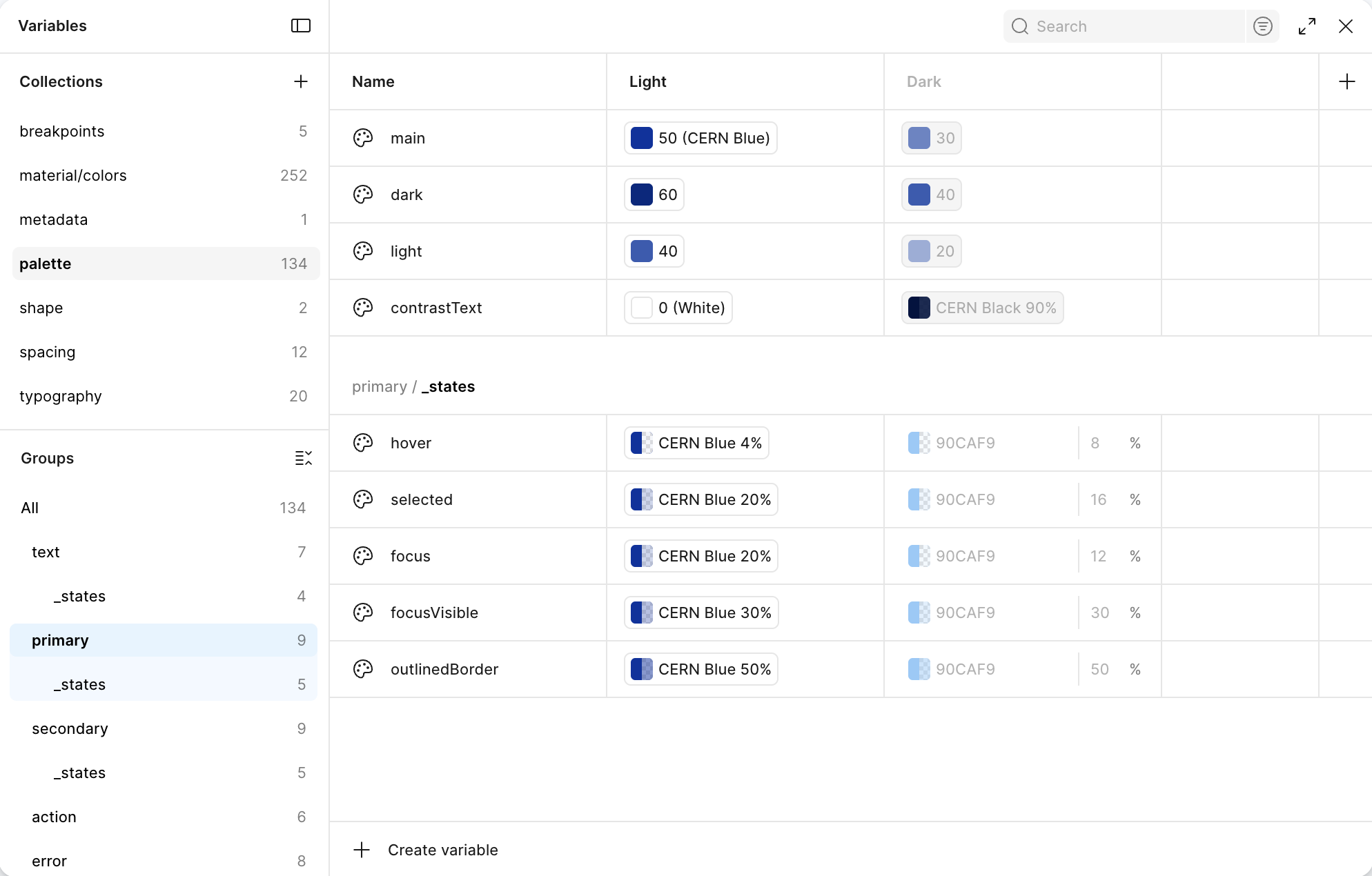
Created the core token layer: colour, typography, spacing, radius, elevation and interaction states. Practical rules that scale across products, not abstract style choices.
Because MUI was part of CERN's stack, I mapped foundations and components directly to it. Design decisions carry from Figma into production code, without manual reinterpretation.
Designed and documented 30+ reusable components based on real CERN use cases, with usage guidance, behaviour, examples and implementation notes for each.
Published the CERN Design System Hub: a living, browsable reference for designers and developers. One place for foundations, components, patterns and guidelines.
Defined a contribution model so teams can propose, improve and extend patterns from real product needs, keeping the system connected to actual use cases instead of becoming static.
The token system defines visual and interaction primitives used across the entire system, and connects Figma directly to Material UI production code.
Semantic colour tokens for primary, secondary, surface, feedback and accessibility-compliant text roles.
A type scale with defined roles, display, heading, body, label, caption, mapped to MUI's typography system.
A consistent spacing scale as tokens, applied to padding, margin, gap and layout units across all components.
Border-radius tokens for buttons, cards, inputs and dialogs, consistent rounded-corner behaviour across the system.
Shadow tokens for layering surfaces, menus, dialogs, cards, in a clear visual hierarchy.
Hover, focus, active, disabled and error states defined as tokens and documented for every component.
Shaped by recurring CERN use cases, not generic UI elements, but reusable answers to problems that appeared across real products.
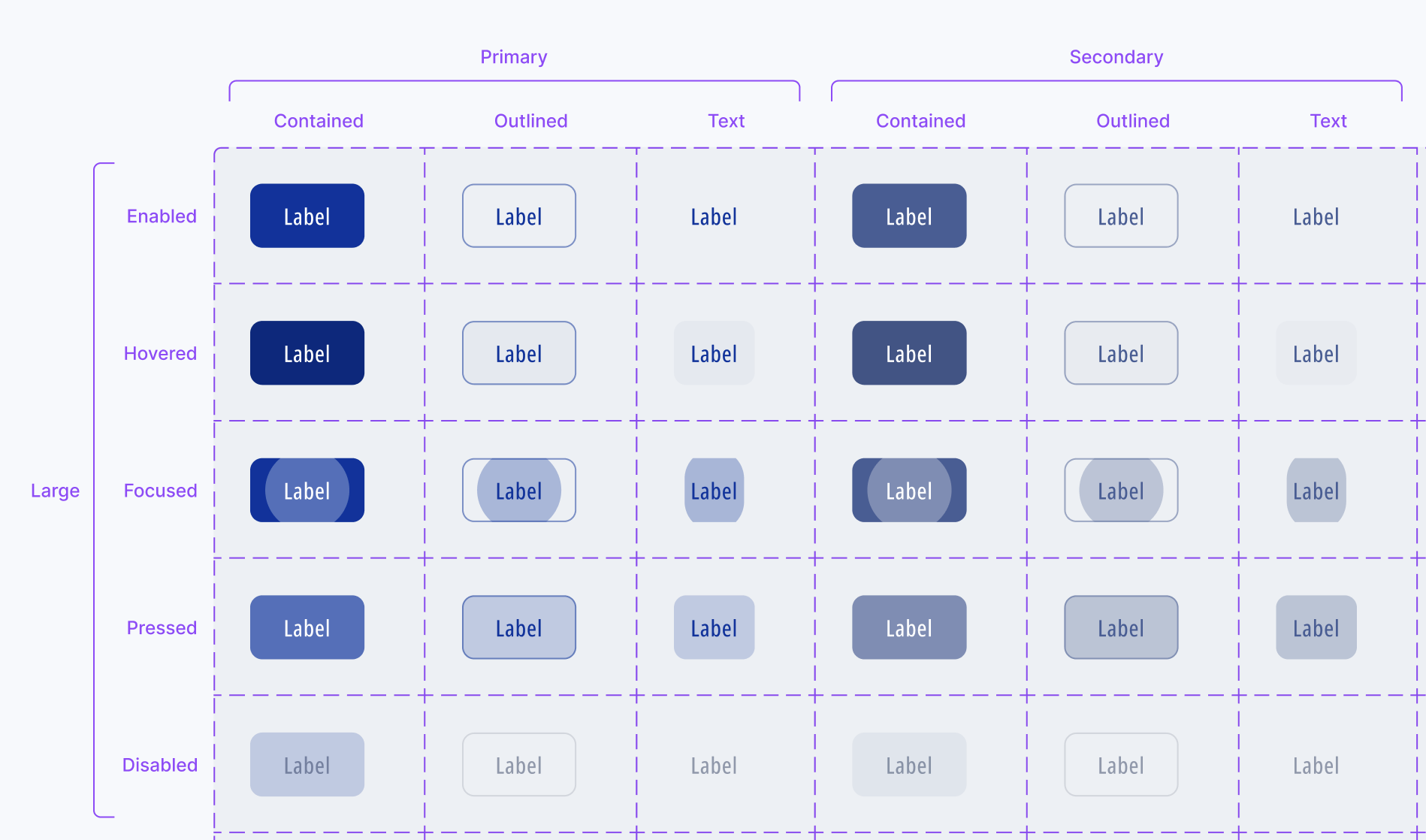
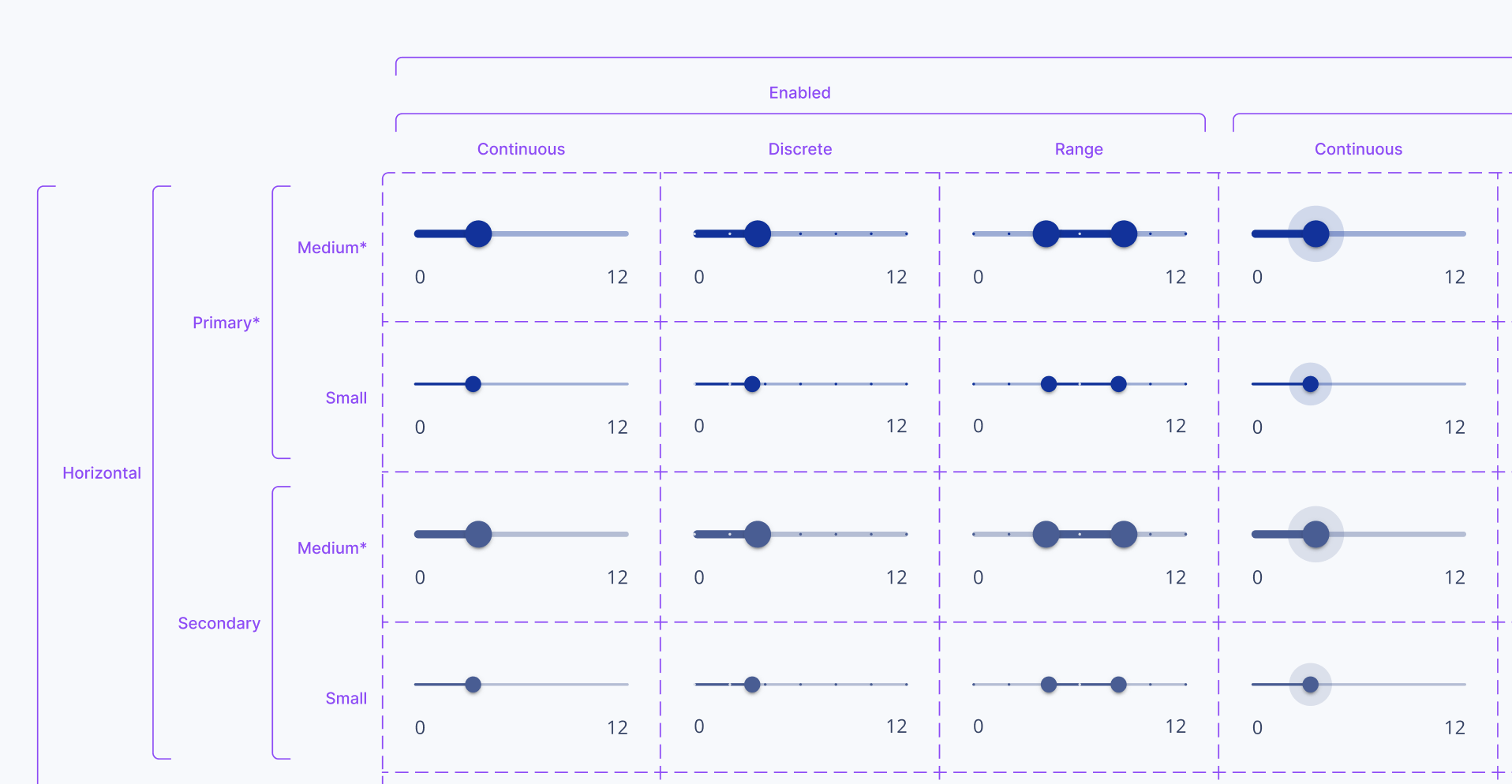
The CERN Design System Hub is the main deliverable: a published reference that turns the design system into something teams can actually use.
The hardest part of CERN UI was not designing a button. It was creating enough clarity, trust and practical value that many teams chose the same button, without being forced to.
This project strengthened my ability to lead design at scale: working across teams, translating use cases into reusable patterns, connecting design to code, and creating documentation that helps a system survive beyond its initial launch.
CERN UI moved teams from isolated interface decisions toward a shared product foundation. That shift, from fragmentation to coherence, is what a design system is really for.
Let's turn your product challenge into something testable.